
Industry News
HOW ARE GLP-1 DRUGS USED FOR WEIGHT LOSS AFFECTING DEMAND FOR OFFERINGS WITH PROTEIN AT C-STORES?

‘We’re seeing a lot more baked goods being sold, baked fish, baked chicken versus the fried option,’ says Michelle Weckstein, director of food and beverage brands at the SunStop convenience-store chain. In this episode of “At Your Convenience,” CSP Editor Chuck Ulie talks with Michelle Weckstein, director of food and beverage brands for Southwest Georgia Oil Co., Bainbridge, Georgia, which operates the SunStop convenience-store chain. They discuss how GLP-1 drugs used for weight loss are affecting the demand for items with protein at convenience stores. On this podcast, Weckstein also talks about how SunStop recognized the GLP-1 diet phenomenon early on—and how her company feels that this is a trend that’s going to be around for a while. “At Your Convenience” brings industry experts and analysts together with CSP editors to discuss the latest in c-store news and trends. From mergers and acquisitions to foodservice and technology, the podcast delivers the story straight to listeners in short-format…
Read MoreTASMANIA PROPOSES TOUGHER LAWS ON ILLEGAL TOBACCO AND VAPES

The Tasmanian Government has released draft legislation aimed at cracking down on the sale and supply of illegal tobacco, vapes and other smoking products. Bridget Archer, Minister for Health, Mental Health and Wellbeing, said the trade in illegal tobacco, e-cigarettes and nicotine pouches had risen significantly in recent years. “The Tasmanian Government has begun consultation with key stakeholders and the community on new legislation that targets this illegal trade, while protecting businesses and consumers who are doing the right thing.” She said the draft laws would introduce new offences, increase penalties, and give authorities powers to close businesses selling illegal products. “This will help further protect the health and wellbeing of Tasmanians, making our tobacco enforcement activities some of the toughest in the country,” she said. Last year, a Memorandum of Understanding (MOU) between the Department of Health and Tasmania Police was established to strengthen enforcement efforts. Felix Ellis, Minister…
Read MoreMORE BOOTS ON THE GROUND TO TACKLE ILLEGAL TOBACCO

Thirty additional full-time equivalent tobacco inspectors will be recruited to boost the NSW Health’s newly established Centre for Regulation & Enforcement with additional funding from the Commonwealth Government. The new Inspectors brings the dedicated state-wide team to a total of 78 staff. Over half of the additional 30 have commenced or are about to commence, and the other half are in the process of being recruited. The NSW and Commonwealth governments have previously discussed the impact of the high level of the federal tobacco excise which is driving many consumers towards cheaper illegal tobacco products. Under the NSW Government’s tough new laws which have introduced closure order powers, NSW Health Inspectors, working together with NSW Police, are continuing to close down stores selling illicit tobacco and vaping goods. The closure of five tobacconists in Sydney’s Inner West last week by NSW Health Inspectors and NSW Police brings the total to…
Read MoreBANKS LOBBY ACCUSES APPLE, CREDIT CARD GIANTS OF PAYMENTS FREE-RIDE

The country’s powerful banking lobby has accused Apple of free-riding on investment in the payment system and described the fees charged by Visa and Mastercard as complex and opaque in a significant escalation in a long-running stoush between the global giants and major Australian lenders. The claims were made by the Australian Banking Association in a submission to a parliamentary inquiry after years of disquiet among domestic financial institutions over what they say are unfair Reserve Bank of Australia regulations that do not apply to their international rivals. Payments through Apple Pay have a cost that the RBA has not been able to regulate, until now. Max Mason-Hubers A parliamentary inquiry this month is examining whether Apple, Visa, Mastercard, along with Google and American Express, should be more tightly regulated. Major Australian lenders led by the Commonwealth Bank have long argued that those companies face few obligations to fund infrastructure…
Read MoreEXCLUSIVE INTERVIEW WITH INSTACART ABOUT HOW AGENTIC AI IS CHANGING THE INDUSTRY – PART ONE
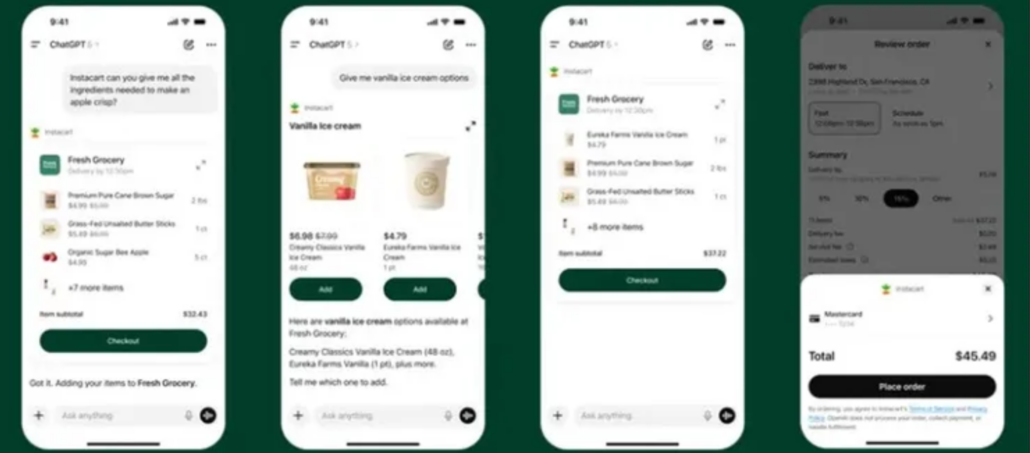
How Instacart is applying agentic AI to drive smarter decision-making, more connected stores, and better experiences for both retailers and shoppers. IGD sat down with David McIntosh, Chief Connected Stores Officer at Instacart, to explore how agentic AI is beginning to reshape the grocery industry. Which parts of Instacart’s business are already benefiting from agentic AI and what impact have you seen so far? We’re in the early stages, but we’re already seeing promising signs of how agentic capabilities can bring meaningful value to both our consumer experience and our enterprise technologies. On the customer side, generative search tools help people move beyond keywords toward natural, conversational guidance that can personalise shopping. Caper Carts – Instacart’s AI-powered smart trolleys – use NVIDIA’s edge AI for real-time computer vision and item recognition, so customers can simply place items in the cart and see them instantly appear. They also deliver location-based recommendations…
Read MoreFIVE GLOBAL HEALTH TRENDS RETAILERS MUST KNOW

From the rise of specific missions to shifts in shopper needs, IGD’s new report identifies the key trends driving health-focused growth in 2026. From the rise of specific missions to shifts in shopper needs, IGD’s new report identifies the key trends driving health-focused growth in 2026. Health is in a new era. It has become a defining force behind retail strategy, shopper behaviour, and commercial growth. IGD’s ‘Global health trends 2026’ report reveals the five trends that will drive health-related growth this year, plus insight into the powerful influence of legislative changes. The report also provides specific actions retailers and suppliers must take to address the opportunities and challenges they face this year. Stricter rules shaping landscape The regulatory landscape continues to demand agile adaptation and reformulation from retailers and suppliers. Governments worldwide are tightening controls on sugar, salt, fat, caffeine, alcohol and nicotine – and 2026 marks a step-change…
Read More