

Aral runs around 2,400 sites in Germany, making it the country’s largest forecourt brand, and around 100 of those are Autohöfe. In June, Aral Autohof Northeim reopened as the pilot for the company’s new truck stop concept, with 20 hot meals served on proper crockery, a trucker lounge, showers, laundry and AI-supported barrier-free parking with vouchers redeemable in store. By its second month the site was running 7% ahead of comparable Autohöfe on shop sales. With Northeim entered into Best Foodvenience Store in the World 2026, Global Convenience spoke to Oliver Munnes, Head of Aral Fuel Sales, about the business case for long-dwell sites, the balance between HVO and megawatt charging, the REWE To Go partnership, and what the rest of the network can take from the pilot.
Aral and the German market
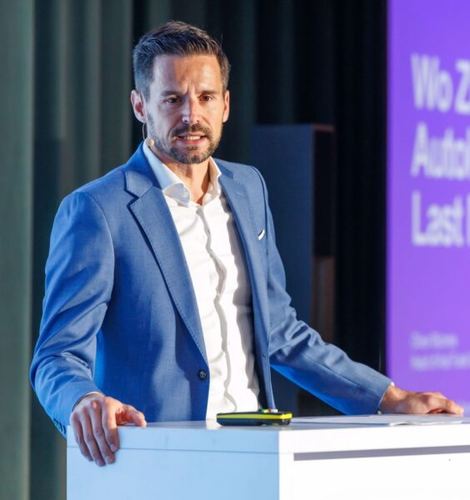
Oliver Munnes
Aral operates around 2,400 sites in Germany and is the country’s largest forecourt brand. From where you sit, what does the shape of that network need to look like by 2035, and what is driving the change: the energy transition, customer behaviour, or commercial returns on individual sites?
With more than 100 years of experience, Aral is one of the most established players in the German forecourt business. The change is driven by all the factors mentioned. By 2035, our network must be even more flexible: still strong in high-quality fuels, but increasingly built around ultra-fast charging, convenience and services that make each stop more valuable for the customer. The future site is not only a place to refuel, but an integrated mobility hub where customers can also recharge, eat, rest and continue their journey with new energy.
Has the relationship between fuel and shop reversed in practice, where the forecourt now draws people in for the shop rather than the other way round, and does that change how you think about site selection and investment?
I would not say the relationship has completely reversed, but it has clearly become more balanced. Fuel and charging still bring customers to our forecourts, but the shop, foodservice and services increasingly decide whether they stay, return and spend more time with us. That does change how we think about investment: we look at the full customer journey and at the revenue potential of the entire site, not only at litres sold.
You spoke at Handel und Wandel about the future of the Autohof. What is the argument you find yourself making most often to people who still see truck stops as low-value infrastructure?
Autohöfe (or truck stops) are often underestimated because people look at them through the lens of the past. In reality, they combine strong locations, high traffic volumes, professional drivers and long dwell times. Germany also faces a shortage of safe truck parking, so modern sites can add real value by improving parking, rest, foodservice, hygiene and energy options. If we invest in them properly, they become highly relevant infrastructure for logistics, travel and future mobility.
The Autohof model and the mobility transition

Aral operates around 100 Autohöfe. Why do you believe these sites become more important as the mobility transition progresses, rather than less?
From our perspective, the mobility transition will not happen everywhere at the same speed. Heavy-duty transport and long-distance travel will need reliable locations where different energy options, parking, foodservice and rest facilities come together. Truck stops have the space, traffic and customer needs to make that integrated mobility offer work. They are where technology openness comes to life, with conventional and alternative fuels coexisting alongside ultra-fast charging during the transition.
Truck electrification is moving more slowly than car electrification, and megawatt charging is planned for Northeim’s second phase. How far ahead of demand are you willing to build, and what has to fall into place on grid connection, standards and vehicle supply before that infrastructure is used at commercial volumes?
We need to build with a clear view of future demand, but we also have to remain commercially disciplined. We have already opened the first megawatt charging hubs at truck stop sites across Germany. In Northeim, megawatt charging is planned for the second expansion stage because we believe heavy-duty electrification will grow, even if it is still at an early stage today. What has to come together is sufficient grid capacity, reliable technology standards, greater availability of electric trucks and fleet customers who can integrate charging into their operations. Our role is to prepare the infrastructure so that when demand scales, the network is ready.
Alongside charging, Northeim now offers HVO. How do you see the balance between lower-emission liquid fuels and electrification in Germany over the next five to ten years, and what are fleet customers asking you for now that they were not two years ago?
We see both technologies playing an important role over the next years. Electrification is essential, but in heavy-duty transport it is still at the beginning, while fleets need practical solutions today. That is why Northeim offers Aral HVO, an alternative to conventional diesel. Fleet customers are increasingly asking for alternative fuels and locations that work operationally for drivers and vehicles. The answer is not either-or, but a portfolio that helps customers move step by step.
Northeim as a pilot

You have entered Aral Autohof Northeim into Best Foodvenience Store in the World 2026, and the site opened as the pilot for Aral’s new Autohof concept in June this year. Your entry notes that car drivers typically spend around 30 minutes on site while truck drivers may stay around 150 minutes. How does a 150-minute dwell time change the commercial model of a site, and what does it let you sell that a standard forecourt cannot?
Longer dwell times fundamentally change the way a site operates. It means the customer is not just passing through; they need a proper break, foodservice, sanitary facilities, maybe laundry, a lounge and a comfortable environment. That creates opportunities for hot meals, a trucker lounge, coffee, convenience and services that support the whole rest period. At Northeim, the longer dwell time is one reason why the foodservice offer, the 38m² trucker lounge and the parking voucher system are so important commercially. We offer truck drivers a living room, where they can spend their mandatory rest periods.
The shop was rebuilt so that the food counter and seating are visible on entry, and the range runs to 20 hot meals served on proper crockery. How far does that take an Autohof shop away from a conventional forecourt convenience offer, and how did you decide where to draw the line between a c-store and a restaurant?
Northeim clearly goes beyond a conventional forecourt shop. Customers can still buy snacks, drinks and groceries quickly, but they can also choose from freshly made sandwiches, hot meals, bakery products and barista-quality coffee. It means one stop can cover everything from refuelling or charging the car to enjoying a proper meal. The line is drawn around convenience: everything has to work for people on the move, including truck drivers, commuters, families and travellers with very different time needs.
The AI-supported barrier-free parking with vouchers redeemable in store is one of the most distinctive elements. What problem were you primarily solving, and what has it done to shop conversion among drivers who park?
The primary problem was making truck parking easier, safer and more efficient at a site with high demand, especially in the evening and at night. The AI-supported, barrier-free system with number plate recognition reduces friction because drivers do not need to stop at a barrier. At the same time, the voucher turns parking into a direct connection with the shop: drivers receive value they can redeem for food or drinks. That supports conversion because parking is no longer separate from the retail experience and it creates the basis for delivering even more tailored offerings in the future.
The lounge, showers and laundry are amenity rather than direct revenue. How do you build the business case for that kind of investment, and what would you need to see to justify it across more of the estate?
We build the business case by looking at the overall customer experience and the long-term value of the site, not just direct revenue from each facility. For truck drivers, showers, laundry and a comfortable lounge are not extras; they are important parts of a proper break. If those amenities encourage customers to choose Aral, stay longer, buy food and return regularly, they support the commercial model. To justify scaling, we would look at customer feedback, shop performance, foodservice growth and operational feasibility across similar locations.
By its second month Northeim was running 7% ahead of comparable Autohof sites on shop sales, with soft drinks and hot beverages leading the growth. Which parts of the investment do you credit most for that, and is there anything that has underperformed your expectations?
The results are encouraging because they suggest that different elements of the concept are working together successfully. I would not credit one single element. The stronger shop design, visible food counter, broader hot meal range, improved seating, modern washrooms and parking vouchers all contribute to a better customer journey. Northeim was already one of our highest-performing sites before the redevelopment. The growth in soft drinks and hot beverages shows that customers are engaging more with the shop offer. It is still early days, so we are cautious about drawing final conclusions, but the site is performing well and giving us valuable learning.
Convenience, partnership and the customer

The REWE To Go partnership began with ten pilot sites in 2014 and now covers around 900 locations. What has changed most in how the concept works over those twelve years, and what has Aral learned that it did not expect at the outset?
The REWE To Go partnership is working well. We started rolling out the format across our network twelve years ago. A few years later, we changed the operating model to future-proof our shops. We centralized the business because we believe this allows us to deliver a better product range and pricing, as well as more effective management of promotions and additional offers. We have also segmented our network. We carefully analyse the customer profile of each site and tailor the assortment accordingly.
Aral develops the foodservice offer while Lekkerland supplies. How does that division of responsibility work in practice, and what does each partner bring that the other could not?
In practice, it is a partnership built around complementary strengths. Aral is a strong brand, and so is REWE To Go. We have an attractive forecourt network in Germany with prime locations and maintain close relationships with our customers. REWE brings strong supply-chain, product and convenience expertise. Northeim shows how that combination can work at a very specific location. Together with REWE and its subsidiary Lekkerland, we aim to build on these strengths and, as partners, become even better at serving our customers’ needs.
Aral’s foodservice business was estimated at around €320 million in 2025. Where does the next stage of growth come from: more sites, a bigger offer per site, or persuading customers to stop who would not otherwise have done so?
The next stage of growth will come from addressing customer needs even more precisely. We can expand strong concepts to more locations, improve the offer at existing sites and make more customers choose Aral. Northeim is a good example of the third point: when foodservice, lounge, parking and services are attractive, the site becomes more than a place people have to stop. It becomes a place they actively choose, which is where the most interesting growth potential lies.
Scaling it: Schwarmstedt and beyond

Schwarmstedt is the next pilot. What will you do differently there on the back of Northeim, and what is deliberately staying the same?
Schwarmstedt will build on the lessons learned from Northeim, but it will not simply be a copy. For example, earlier this spring we opened a megawatt charging hub for electric trucks in Schwarmstedt, offering charging capacities of up to 1,000 kilowatts. This site is particularly interesting because we can further explore how truck charging and Autohof services work together. What stays the same is the overall ambition: a modern Autohof that combines a strong REWE To Go convenience offer with mobility solutions, additional services and a better experience for drivers.
Not every site will justify a full rebuild. What does a realistic, scaled-down version of the Northeim concept look like for the rest of the Autohof network, and how do you prioritise which sites get what?
We have already introduced a wide range of improvements for our customers across many of our truck stops. For some sites, the right answer may be a better foodservice and coffee offer, parking vouchers, improved seating or upgraded sanitary facilities rather than a full rebuild. We prioritise based on location, traffic, customer mix, commercial potential and the physical possibilities of each site. The learning from Northeim helps us identify which elements create the most value and which can be adapted flexibly across different Autohof sites.
Which elements of Northeim do you think could travel beyond truck stops into the wider 2,400-site network, and which are genuinely specific to the Autohof environment?
Northeim allows us to see how customers use the different facilities, listen to their feedback and understand which elements of the concept could be rolled out across other locations. A key part of the concept is REWE To Go, which combines the trusted quality and product range of a food retailer with the convenience and speed that customers need when travelling. We have established around 900 smaller REWE To Go shops at Aral sites, making it a strong and well-recognised brand. Our sites are located in both urban and rural areas, and we will continue to tailor our offer even more closely to the needs of our customers. This is not about a one-size-fits-all approach, but about finding the right solution for each individual location, such as self-service coffee machines or other offerings.
Our judges and our readers will be looking at Northeim alongside sites from around the world. If you had to make the case for it in one answer, what should the international convenience industry take from what Aral has built there?
In short, the answer is that Northeim is a living room for truckers. The longer answer is that Northeim is our pilot site for Aral’s truck stops of the future. Located on one of the most important transport corridors in Germany and Europe, this high-traffic site has received a comprehensive upgrade. These are exactly the locations where we need to invest more as the mobility transition progresses. Northeim brings together fuel, EV charging, freshly prepared food and facilities for longer breaks in one destination, helping shape the future of Aral’s roadside offer. Most importantly, it shows that foodvenience is not a side offer at a mobility location; it can be the element that turns a stop into a destination.
View article source here.
Subscribe to our free mailing list and always be the first to receive the latest news and updates.